When most people think of long-duration energy storage (LDES), they think of 100-hour iron-air batteries or vanadium flow systems. But the LDES market is not a monolith. According to the LDES Council, a mix of technologies is essential for grid reliability — and zinc-air batteries occupy a critical position in that mix.
While iron-air targets multi-day renewable lulls (100+ hours), zinc-air is designed for medium-duration applications: 8 to 24 hours of storage, enough to manage daily variability in solar and wind generation. For grid operators, this is the workhorse duration — handling everything from evening peaks to overnight lulls.
This article explains why zinc-air technology is gaining momentum, which companies are leading the charge, and why it matters for utilities, data centers, and industrial energy users.
What Is Zinc-Air?
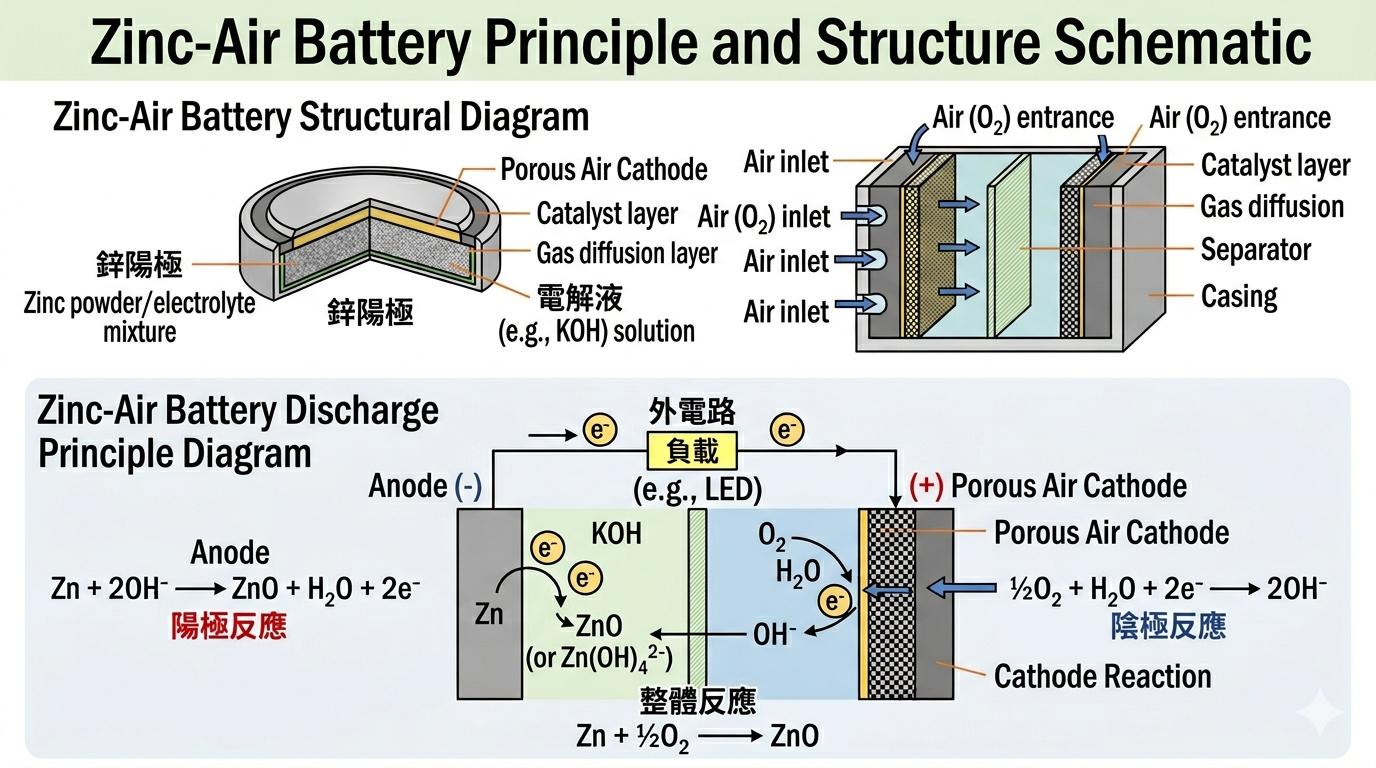
Zinc-air batteries generate electricity by reacting zinc with oxygen from the air. During discharge, zinc oxidizes; during charging, the process reverses, converting zinc oxide back into metallic zinc. The chemistry is inherently safe — using a water-based electrolyte — and relies on abundant, low-cost materials.
Unlike lithium-ion, zinc-air poses no fire risk. Unlike iron-air (which targets ultra-long duration), zinc-air can be designed for higher power density, making it suitable for a wider range of applications, including behind-the-meter storage and EV charging buffers.
Why Medium-Duration LDES Matters
The LDES Council has been explicit about the need for multiple duration buckets:
Short-duration (4–8 hours): Lithium-ion dominates — daily peak shaving, frequency response
Medium-duration (8–24 hours): Zinc-air, flow batteries — daily variability management
Long-duration (24–100+ hours): Iron-air, pumped hydro, CAES — multi-day renewable lulls
As Mahika Sri Krishna, Senior Manager at the LDES Council, told Climate Home News in March 2026: "Medium-duration storage solutions can help manage daily variability in renewable generation, while very long-duration systems may help address less frequent but more challenging reliability events."
This is not a competition between technologies. It is a portfolio approach. A grid with high renewables penetration needs all three duration buckets — and zinc-air is one of the most cost-effective options for the middle bucket.
Key Players in Zinc-Air
Several companies are commercializing zinc-air technology for grid-scale and industrial applications:
E-Zinc (Canada/US): Focuses on ultra-long-duration zinc-air systems (up to 100 hours) using a proprietary electrolyte and modular design. The company has raised significant funding and is targeting demonstration projects in North America.
Zinc8 Energy Solutions (Canada/US): Develops zinc-air flow batteries with scalable energy and power ratings (typically 8–24 hours). Zinc8 has deployed demonstration projects in New York State and is actively targeting the commercial and industrial (C&I) market.
NantEnergy (US): Acquired by e-Zinc in 2025, NantEnergy had developed rechargeable zinc-air systems for telecom and remote power applications, adding to the combined intellectual property pool.
Phinergy (Israel): Focuses on zinc-air for electric vehicle range extenders and backup power, with potential applications in grid storage.
In Europe, research institutions including Fraunhofer Institute (Germany) and TU Delft (Netherlands) are advancing zinc-air electrode and electrolyte technologies, supported by EU Horizon Europe funding.
Cost and Performance Advantages
Zinc-air offers several compelling advantages for medium-duration LDES:
Low material cost: Zinc is abundant, widely recycled, and not subject to the same supply chain constraints as lithium or cobalt
Inherent safety: Water-based electrolyte means no thermal runaway risk — critical for urban deployments
High energy density (theoretical): Up to 1,086 Wh/kg, significantly higher than lithium-ion in theory, though practical systems currently achieve lower figures
Scalable manufacturing: Zinc-air components can be produced using existing battery manufacturing equipment
On a levelized cost of storage (LCOS) basis for 8–24 hour applications, zinc-air is projected to be competitive with — and in some scenarios cheaper than — lithium-ion by 2028–2030, according to industry analysts.
Policy Tailwinds
Zinc-air stands to benefit from several policy trends:
UK’s LDES revenue support mechanism: Currently consulting on an 8-hour minimum duration, which aligns perfectly with zinc-air’s target market
Germany’s capacity market (2027): Technology-neutral auctions will allow zinc-air to compete on cost and performance
US domestic content requirements: Zinc is mined in North America, and supply chains are being developed outside China
EU Critical Raw Materials Act: Zinc is not considered a critical raw material, avoiding the regulatory and supply chain risks associated with lithium and cobalt
Challenges to Watch
Zinc-air is not without its challenges:
Round-trip efficiency (RTE): Currently lower than lithium-ion (typically 50–65% vs. 85–95% for lithium), though improving with electrolyte and catalyst advances
Cycle life: Early systems suffered from limited recharge cycles, but newer designs are achieving 5,000+ cycles — sufficient for daily cycling over 10+ years
Power density: Lower than lithium-ion, meaning larger physical footprint for the same power rating — less critical for grid-scale but relevant for urban or space-constrained sites
These challenges are actively being addressed through research into better air cathodes, advanced electrolytes, and hybrid system designs (e.g., zinc-air paired with lithium-ion for fast response).
Market Outlook
The global zinc-air battery market was valued at approximately $217 million in 2025 and is projected to reach $676 million by 2034, growing at a CAGR of 13.5% (Source: various industry reports, March 2026).
Key growth drivers include:
Falling costs of zinc-air systems as manufacturing scales
Increasing recognition of medium-duration LDES as a distinct market segment
Policy support for non-lithium, domestically sourced storage technologies
Data center and industrial demand for safe, long-duration backup power
Further Reading
For ongoing coverage of zinc-air, iron-air, and other LDES technologies — plus policy tracking in the UK, Germany, and beyond — visit LDESgrid.com, the brand gateway for grid decarbonization.
This article will be updated as new zinc-air demonstration projects and commercial deployments are announced.